

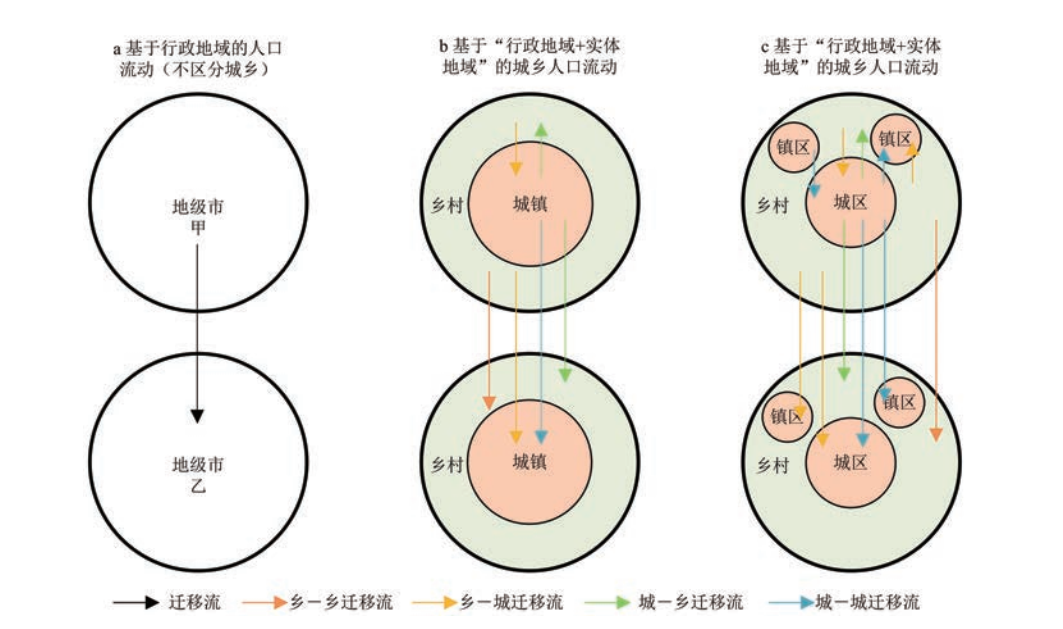
Urban-rural integration is a fundamental aspect of China's modernization process, and population mobility between urban and rural areas provides an important basis for its realization. Drawing on the changing characteristics of population mobility in China and relevant theoretical perspectives, this paper examines the relationship between population mobility and urban-rural integration and discusses its policy implications. The study finds that population mobility in China has moved beyond the traditional one-way flow from rural to urban areas and now shows more diversified patterns, including urban-rural dual residence, return migration and reverse migration from cities to rural areas. These mobility patterns promote the circulation and reallocation of labor, skills, capital and knowledge, thereby facilitating the restructuring of county-level urban-rural factors and the integration of economic, social and spatial systems. However, many counties still face problems such as the slow urbanization of rural migrants, excessive concentration of population in county seats, spatial separation of family members and insufficient endogenous momentum for sustained population flow. To promote county-level urban-rural integration, differentiated policies should be adopted according to local conditions, with emphasis on improving public services for mobile populations, supporting urban-rural mobile families and building multi-source data monitoring systems for population mobility.
China's population migration is undergoing a profound transition and has become a key force reshaping urban-rural relations. This paper reinterprets urban-rural relations in classical migration theories, summarizes the main features of China's current migration transition from the perspective of structural change, and examines its mechanisms of influence. In terms of spatial restructuring, the growth of urban-torural migration and localized migration has partly broken the traditional pathways of urban-rural linkage. Through population mobility, the allocation of capital, technology, information, and other factors between urban and rural areas has been reshaped, making migration an important driver of urban-rural integration. In terms of group restructuring, increasingly frequent family migration has shifted household livelihood strategies from urban-rural dual residence toward urban settlement, strengthening the endogenous momentum of citizenization and providing two-way impetus for urban-rural restructuring. This paper proposes an analytical framework of "migration structural transition—urban-rural relation evolution" and offers policy implications. Future research should focus on dynamic tracking, new data and technologies, and interdisciplinary integration.
Reliable and continuous data on China's urban-rural population migration and mobility provide a fundamental basis for analyzing demographic transition and its spatiotemporal dynamics, and offer critical support for evidence-based policymaking on the two-way flow of population, resources, and labor between urban and rural areas and on integrated urban-rural development. This paper systematically reviews the current data foundations and limitations of research on China's urban-rural population migration, and identifies the challenges and opportunities associated with census data and big data. The findings show that existing research still faces evident data shortages, including insufficient attention to urban-rural geographic distinctions, limited use of flow data, inadequate fine-grained origin-destination analysis, weak examination of migration-flow structures, and a lack of micro-scale studies. Census-based migration research also suffers from limited spatiotemporal comparability, as reflected in repeated revisions of urban–rural statistical standards, fluctuating and discontinuous collection scales of origin information, coarse spatial resolution, and related problems. The integration of population census data, big data, and artificial intelligence brings new opportunities for studying urban-rural population migration and mobility. AI can help integrate multi-source data, improve spatial precision, generate flow data, and support deeper analyses, such as decomposing migration-flow structures and uncovering hidden associations.
As an important process in the reallocation of productive factors, population migration has a profound impact on the spatial interaction and coordinated development of regional economies. Based on a spatial simultaneous equations model, this study systematically examines the spatial interaction between population migration and economic growth in the Yangtze River Delta region from multiple perspectives. The data are derived from China's sixth and seventh national population censuses, economic statistics, and geospatial datasets. The results show that population migration and economic growth mutually promote each other within local spatial units. Both population migration and economic growth show significant positive spatial spillover effects between local and neighboring regions, while a certain degree of negative spatial interaction exists between them across local and neighboring regions. The mutual promotion between population migration and economic growth within local regions remains the strongest, although it has weakened over time. The spatial interaction effect of population migration between local and neighboring regions has also declined. By contrast, the spatial spillover effect of economic growth and its spatial interaction with population migration have both strengthened. The mutual promotion between intra-provincial migration and economic growth is significantly stronger than that between inter-provincial migration and economic growth within local regions. At the interregional level, however, the spatial interaction between inter-provincial migration and economic growth is relatively stronger than that involving intra-provincial migration.
Using microdata from the 2018 China Migrants Dynamic Survey, this study examines the effect of local public healthcare service utilization on the settlement intentions of rural-urban older migrants, and explores heterogeneity by health status, marital status and education. Four types of public healthcare services are analyzed: medical insurance, family doctor services, resident health records and health education. The results show that local public healthcare service utilization significantly increases settlement intentions. Specifically, medical insurance, resident health records and health education have positive effects, while family doctor services show no significant overall effect. Older age, higher per capita monthly household expenditure, unemployment, intra-provincial migration, retirement-oriented migration and better neighborhood green space are associated with stronger long-term settlement intentions. Heterogeneity analysis shows that family doctor services have stronger effects among migrants in poorer health and those who are unmarried, divorced or widowed. Resident health records have stronger effects among migrants in better health than among those in poorer health. The effect of local public healthcare service utilization does not differ significantly by education. These findings suggest that improving accessible and targeted public healthcare services can help enhance the urban integration of rural-urban older migrants.
Life-course stages shape migrants' decisions and their intention to obtain local hukou. From a life-course perspective, this study examines changes in hukou settlement intention among the migrant population and the mechanisms behind these changes, with particular attention to gender and hukou-status differences. Using regression models, the study finds that hukou settlement intention follows an age-related pattern of rising, declining, and rising again, reflecting how migrants' family-based decisions evolve across life-course stages. Marriage and childbirth significantly increase the intention to settle, with the effect peaking when children are aged 0-3. As children grow older and enter education stages, the intention gradually declines. Gender differences are also evident. Although female migrants generally show stronger hukou settlement intention than male migrants, their intention varies more substantially across the life course and shows a more pronounced decline in later stages. Hukou status further differentiates settlement intention: non-agricultural hukou holders show stronger intention than agricultural hukou holders, partly because of differences in life experience, familiarity with the destination city, and expected returns from local hukou. Overall, life-course changes in settlement intention reflect the combined effects of family-structure adjustment, childcare and education burdens, hukou-status differences, and migrants' demand for public services in destination areas.
Promoting the urban citizenship and social integration of rural migrants is a primary task of new urbanization. Although institutional barriers to rural migrants' entry into urban areas have been gradually lowered, identity barriers resulting from the long-standing urban–rural divide remain. However, little attention has been paid to how the spatial imbalance of population mobility affects rural migrants' identity. Against the background of county-centered urbanization, this paper examines the impact of the size distribution of county-level floating populations on rural migrants' identity and reveals its heterogeneity from the dual spatial perspectives of outflow and inflow areas. The results show that: 1) rural migrants' identity has a negative scale effect: in counties with a higher proportion of floating population, their sense of identity is weaker and their perception of being "strangers away from home" is stronger. 2) This negative scale effect operates through two channels: perceived discrimination and willingness to integrate locally. 3) Cultural and economic gaps between origin and destination areas further intensify the negative impact of population mobility on identity. 4) In promoting county-centered urbanization, attention should be paid to the paradox of "mobility freedom and integration conflict." It is necessary to increase the supply of social integration policies, reduce social exclusion, strengthen migrants' sense of identity, transform "strangers away from home" into "locals at home," and promote the shift from temporary mobility to rooted integration.
Traditional gender roles and the disruption of original social networks often prompt rural migrant women in urban China to rebuild social ties through neighborhood interaction, thereby developing place attachment and gaining emotional support. However, existing studies have paid insufficient attention to the relationships among neighborhood interaction, place attachment, and subjective well-being, as well as the moderating role of neighborhood composition. Based on survey data from rural migrant women in Nanjing, this study uses structural equation modeling to examine these relationships across different neighborhood types. The results show that the number of community friends, the frequency of neighborhood contact, and participation in neighborhood activities all significantly promote place attachment. Both place attachment and neighborhood contact have positive direct effects on subjective well-being, whereas participation in neighborhood activities shows a negative direct effect. Nevertheless, neighborhood interaction also enhances subjective well-being indirectly by strengthening place attachment. Moreover, the effects of neighborhood interaction on subjective well-being vary significantly across neighborhoods with different compositions. These findings highlight the importance of meaningful neighborhood engagement and inclusive community environments for improving the well-being of rural migrant women.
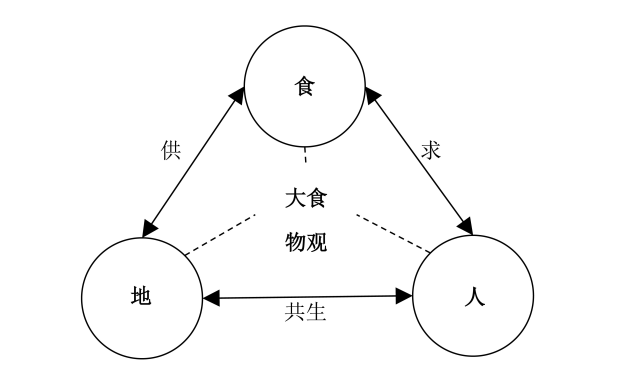
The Greater Food Concept reconfigures the relationship among humans, food, and land. Against the backdrop of tightening resource constraints and growing ecological pressures, traditional supply–demand frameworks are insufficient to explain the complex socio-ecological interactions of food systems. Taking the Greater Food Concept as its theoretical point of departure, this paper constructs an analytical framework for the "human-food-land" relationship and traces its historical evolution in Chinese society. The findings show that this relationship has evolved from primitive "coherence" to industrial "imbalance" and is now moving toward "harmonious symbiosis." The Greater Food Concept goes beyond linear, production-oriented thinking by promoting diversified food supply, optimized demand structures, and coordinated development of food quantity, quality, ecology, and nutrition security. At the macro-system level, it reshapes the logic of food exchange between human society and ecosystems, thereby advancing sustainable food-system transformation and balancing resource utilization with human well-being. This relationship also embodies the Chinese philosophical ideas of "the unity of humanity and nature" and "following the way of nature," offering a theoretically enriched framework for global sustainable development.
Rural actors and their agency are central to integrating rural regions into global markets and promoting rural transformation. Drawing on global production networks and self-gentrification theory, this paper develops a "dual embeddedness" framework to explain how rural actors mobilize resources through global production networks while embedding themselves in local society. Taking coffee entrepreneurs in Baoshan, Yunnan as a case, the study uses fieldwork and interviews to examine this framework. The findings show that, first, by being embedded in global production networks, local coffee entrepreneurs respond to global market changes, introduce external knowledge and resources, and promote the specialization and upgrading of the coffee industry, thereby enhancing local value creation. Second, by being embedded in local rural society, these entrepreneurs contribute to local economic development, enhance their economic and social status, and reshape local material landscapes and cultural environments through engagement with rural communities. The study highlights the importance of a global perspective and shows that rural actors' agency provides an important mechanism for contemporary rural socio-economic transformation.
The digital cultural industry is an important carrier of cultural innovation and national cultural soft power. Based on big data mining, this paper examines the spatial agglomeration characteristics and evolution of Guangzhou's digital cultural industry over the past 40 years. Drawing on the TOE framework and using fuzzy-set qualitative comparative analysis (fsQCA), it further explores the configurational effects of five factors: innovation capability, economic level, location conditions, resource endowment and consumption capacity. The results show that: 1) Guangzhou's digital cultural industry has experienced three stages: budding growth, rapid development and stable development. 2) Its spatial pattern is characterized by multi-core clustering and an "airplane-shaped" structure. With Tianhe District as the core, the industry expands outward and along a north–south axis, and high-value agglomeration is mainly concentrated in the north–south longitudinal "body" area. 3) The agglomeration degree of the four categories follows the order of digital creative content, digital cultural entertainment, digital cultural technology equipment manufacturing and digital cultural services, indicating uneven spatial distribution. 4) High agglomeration is mainly shaped by demand-driven environment–technology synergy and demand-driven environment–location synergy, while non-high agglomeration is related to organizational, technological and environmental deficiencies. Guangzhou should optimize its industrial spatial structure, cultivate new agglomeration models and strengthen spillover effects.
Strengthening the core functions of central cities and enhancing their spillover effects constitute an important pathway for promoting integrated development in the Yangtze River Delta Urban Agglomeration (YRD). Using panel data for YRD cities from 2003 to 2021, this study constructs an evaluation index system to examine the evolution of urban core functions and their economic spillover effects on peripheral cities. Based on matched data between central and peripheral cities, empirical analyses are conducted to identify both the magnitude and spatial extent of these effects. The results show that: 1) the level of core functions in YRD central cities has continuously improved, with increasingly prominent dominant functions, and a pattern of "differentiated yet coordinated" functional division has gradually emerged among cities. 2) The enhancement of core functions in central cities generates significant economic spillover effects and promotes economic growth in peripheral cities; transportation and scientific innovation functions serve as the primary transmission channels. 3) The effective radiation radius of the spillover effects is approximately 200 km. Beyond this threshold, the positive effects gradually weaken and may even turn negative. As the national central city of the YRD, Shanghai exhibits a larger spatial reach and stronger spillover intensity than other cities.4) Improvements in transportation infrastructure and human capital accumulation in peripheral cities strengthen their capacity to absorb spillovers from central cities, thereby supporting high-quality economic development. These findings provide policy implications for coordinating the enhancement of central-city functions with the development of peripheral cities and for further advancing regional integration in the YRD.
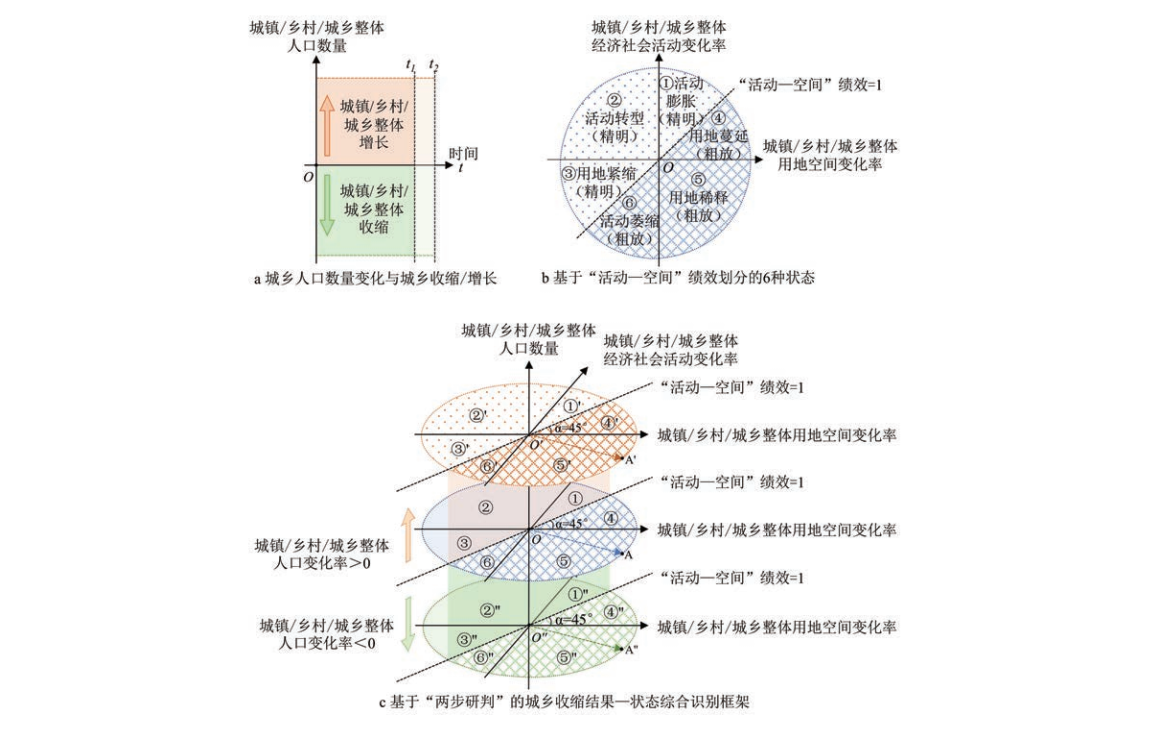
During China's economic transition, declining population growth and regional re-differentiation have accelerated urban-rural shrinkage in major urban regions. Focusing on the connotations of "phenomenon-process-effect", this study constructs a two-step assessment framework for identifying urban-rural shrinkage from the perspective of urbanization, and examines its spatio-temporal differentiation and correlation with urbanization. Taking 149 county-level units in the Beijing-Tianjin-Hebei region from 2000 to 2020 as the research objects, the study conducts empirical analysis using population census, statistical yearbook, land-use, and nighttime light data. The results show that urban-rural shrinkage is characterized by spatial agglomeration, inertial development, and self-limitation, with the overall pattern shifting from scattered shrinkage to more extensive shrinkage. At the county level, urban-rural shrinkage is closely associated with urbanization: in terms of scale, the degree of shrinkage affects the direction of urbanization change; in terms of quality, shrinkage exerts a stronger negative effect on urbanization quality. As China enters the middle and late stages of urbanization transition, the stabilizing mobility of population between urban and rural areas and the weakening of on-site urbanization have made population, land-use, and industrial factors more active in shaping county-level shrinkage. This study provides evidence for governing urban-rural shrinkage and improving urbanization quality.
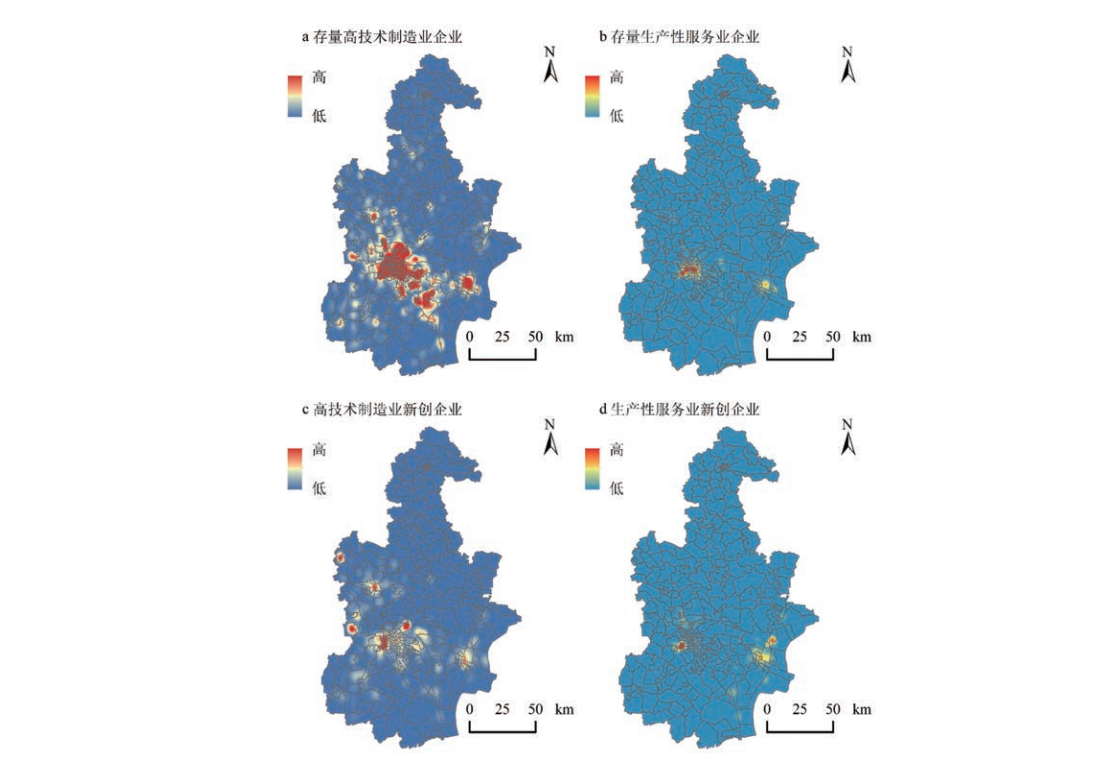
Promoting spatial collaborative agglomeration between high-tech manufacturing and producer services helps improve resource allocation and industrial upgrading. Taking Tianjin as a case, this study uses township- and subdistrict-level enterprise data to examine the spatio-temporal characteristics and influencing factors of collaborative agglomeration among start-ups in the two sectors. Methods include kernel density estimation, an industrial collaborative agglomeration index, bivariate spatial autocorrelation, the geographic detector, and multiple regression. The results show that such agglomeration has occurred within Tianjin. The spatial dependence between the two sectors has strengthened, but follows an inverted U-shaped pattern: areas with excessive high-tech manufacturing density become less attractive to producer service start-ups. Knowledge stock, entrepreneurial carriers, innovation ecosystem, industrial structure, wage level, and their interactions are key drivers, especially when combined with locational factors. However, the rapid decline in the secondary-industry share, industrial spatial differentiation, separation between production and urban functions, and jobs-housing separation hinder further agglomeration.
Farmers are key actors in traditional village conservation and tourism development, and their livelihoods deserve priority in the sustainable development of tourism-oriented traditional villages. Based on two typical traditional villages in Wuzhong District, Suzhou, this study evaluates farmers' livelihood capital and livelihood stability, applies a coupling coordination model to measure their relationship, and uses regression analysis to identify key influencing factors. The findings show that tourism-based livelihood strategies promote the accumulation of livelihood capital. Livelihood capital decreases in the order of tourism-specialized, tourism-dominated, wage-labor-dominated, balanced-income, and traditional-agriculture households. Livelihood stability and coupling coordination show an inverted U-shaped relationship with tourism participation. Different forms of livelihood capital affect coupling coordination to varying degrees, but generally have positive effects. Strengthening financial and social capital is therefore important for enhancing farmers' sustainable livelihood capacity.
The coordinated advancement of beautiful and harmonious countryside construction and livelihood well-being improvement is an important pathway for promoting comprehensive rural revitalization and Chinese-style modernization of agriculture and rural areas. Taking Chashan Village, an ethnic village in Guangxi, as a case, this study uses interviews, observation, and grounded theory to examine the synergistic effects and mechanisms between beautiful and harmonious countryside construction and livelihood improvement. The findings show that Chashan Village integrates five dimensions-people, land, industry, governance, and environment-to generate internal momentum and bring together internal and external forces for rural construction. In this process, economic, social, and spatial synergies have emerged: income growth has been achieved through the integration of primary, secondary, and tertiary industries; rural harmony has been promoted through governance innovation and cultural interaction; and the living environment has been improved through the optimization of the "production-living-ecological" spaces. The study further reveals a three-dimensional linkage mechanism involving element synergy, demand-driven development, and institutional support. The practice of Chashan Village provides a reference for understanding the synergy between beautiful and harmonious countryside construction and livelihood improvement in ethnic regions.
Wayfinding behavior in scenic spots, an integral component of the tourism industry, is critical to tourist experiences and site optimization; however, its dynamic cognitive mechanisms remain poorly understood. Grounded in cognitive map theory, this study integrates social relations to construct an "individual cognition-environmental interaction-social relations" model, verifying the dynamic transfer mechanism of cognitive maps through experiments. The findings indicate that: First, wayfinding comprises three stages information perception, path planning, and behavioral movement with tourists adhering to the principle of least effort. Second, spatial cognition involves a synergy between pre-stored information and active processing; prospective planning mitigates external cue reliance, while superior spatial ability reduces backtracking. Third, companions mitigate navigational errors by sharing cognitive load and cross-verifying information via peer feedback. This study extends cognitive map theory to tourism, elucidates social relations' impact on behavior, and offers practical insights for signage optimization and visitor experience enhancement.
As distinctive non-routine spaces, theme parks play an important role in creating tourists' well-being, yet their spatial mechanisms remain insufficiently examined. From the perspective of heterotopia, this study develops a theoretical framework of "spatial alienation–identity construction" to examine how theme park spatial perception influences tourists' well-being. Drawing on grounded theory, scale development, and quantitative validation, the study identifies four dimensions of spatial perception in theme parks: aesthetic construction of physical space, functional value of activity space, thematic quality of conceptual space, and community atmosphere of interpersonal space. These dimensions jointly shape tourists' well-being, which consists of hedonic and eudaimonic well-being. The results show that aesthetic construction and functional value have significant positive effects on hedonic well-being, while community atmosphere significantly enhances eudaimonic well-being. The effect of thematic quality is relatively limited, and the effects of different dimensions vary across groups with different visiting frequencies. Further analysis indicates that on-site identity construction plays a significant mediating role between theme park spatial perception and eudaimonic well-being, suggesting that theme park spaces influence tourists' well-being partly through situated identity construction.